Great founders do the hard things
Anyone can copy your app. What they can’t copy are the sixty conversations you’ve had with people who live with the problem.

I remember the first time I built something with AI. I typed a simple prompt into a tool called Bolt.new, and it built me a working application for a small family project. It absolutely blew my mind. I jumped on a call with a founder friend, told them to go to Bolt, and listened to their jaw hit the floor over the phone as it built their thing too.
Since then I've built dozens of things, mostly small, one-off personal apps. Any time I spot even a tiny opportunity, I run straight to an AI tool and build it. Because it's fun. Watching the robot do all the work and magically spit out a real, usable thing has not gotten old. It's a slot machine that pays out every single time.
Which, frankly, is a little worrying. Because none of this is hard. But building a startup is really hard. There's a big gap there!
Everyone's a builder now
Anyone who has heard me speak publicly over the past year has heard me rant and rave about the importance of learning to build. At Genesis, we're still pushing that message hard. I believe everyone should get comfortable with modern AI tools, no matter what they do for a living.
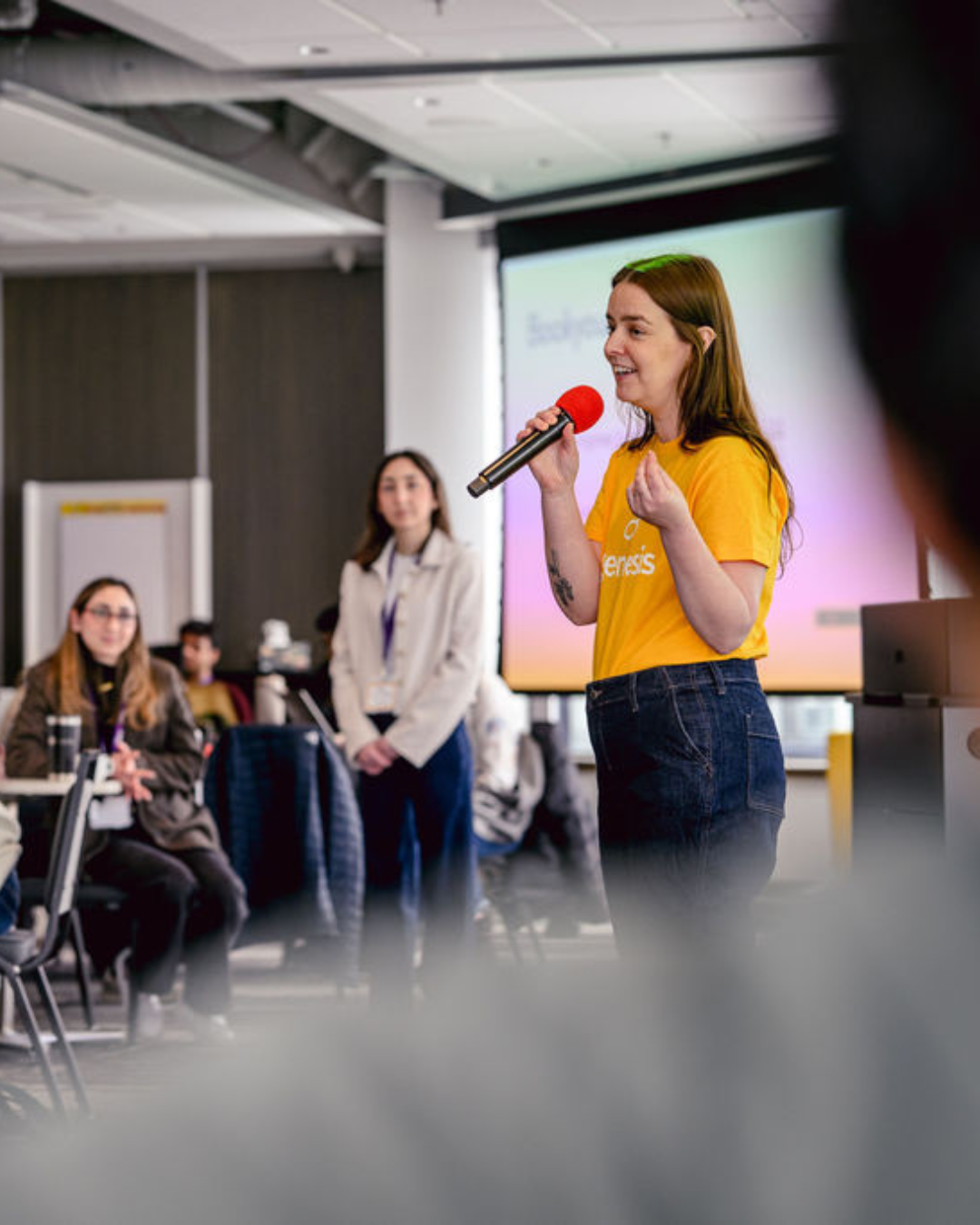
In the spring we ran an event called Build48. Close to 100 people spent a weekend learning to build, with the goal of launching a real application into the world within 48 hours. We didn't expect a pile of new companies to come out of it. We wanted to make builders. It worked. We introduced a lot of new people to building, and some of them indeed are founders at Genesis today.
We're not remotely unique in this. More than 40 million projects have been built on Lovable, the tool we used at Build48, according to a May Observer profile. Roughly 200,000 new ones start every day. Apple's App Store took in about 560,000 new apps in the first half of 2026, roughly double last year's pace, according to Sensor Tower data reported by The New York Times. It’s on track to blow past its 2016 record of 890,000.
Supply is up. Demand isn't.
Here's the catch. The supply of software is going vertical, but the demand for it is not. Over that same stretch, the same Sensor Tower data shows App Store downloads grew just 2%. Massively more supply chasing flat demand means a lot less success per app built.
So of the 200,000 Lovable projects started today, how many do you think will ever see a dollar of revenue?
This isn't a new problem. AI just gets us there faster. When CB Insights analyzed more than 400 venture-backed startups that shut down since 2023, 70% ran out of capital. But the report calls that the final cause, not the root problem. The more telling number is that 43% had poor product-market fit. In other words, they built something nobody wanted. AI didn't fix the real reason startups die. It just lets you arrive there quicker.
The part AI can't do for you
It used to be that the hard part was building the thing, and that difficulty protected you. Now, for a lot of products, anyone can copy your app in a week. So what's left?
Understanding your customer. If you want to win, you should know your customer's problem better than anyone else alive. In a world where "moats" and "defensibility" are being challenged every day, that depth of understanding is the competitive advantage worth chasing. And AI can't do it for you.
Not only that, but for most people this part SUCKS. It's cold emails, LinkedIn requests, Facebook ads, cold calls, and plenty of other things that give people anxiety. Especially if you're the type of person who is most comfortable in front of a computer making cool shit.
One warning while we're here: talking to people isn't the same as validation. People are polite. They'll tell you your idea is great because it's easier than telling you the truth. Rob Fitzpatrick wrote a whole book on this, The Mom Test, and it may be the best few hours a new founder can spend. Ask about their lives and their problems, not your idea. Conversations show you the problem. Someone paying you proves you solved it.
The good news? AI makes even this part a little easier. It can automate parts of the process, dig up contact info, and write very average marketing copy (and in the early days, average is often more than fine). Better yet, cheap building is itself a discovery tool. Instead of describing a hypothetical, you can whip up a working prototype in a few hours and throw it in front of people right away.
The even better news? You don't have to do it alone. This is where incubators and startup communities come in.
Two phone calls
I once worked with a founder for months who was building, and building, and building. Every time I saw him, I asked how many people he'd reached out to that week for a conversation. There was always an excuse. The app just needed to get a little further. He just couldn't find the time. But when I dug a little deeper, the truth was simpler: he didn't want to do it. It gave him anxiety.
So I told him to pick up the phone and call someone right then and there. There would never be a better time. If it went well, great. If they were rude and hung up on him, I was right there for support, and to help him laugh it off.
He made two calls. The first person hung up as soon as he started talking. The second was delightful, spoke with him for five minutes, and gave him his first real taste of customer discovery.
That's the part that matters. Anyone can copy your app. What they can't copy are the sixty conversations you've had with people who live with the problem, and those conversations are what let you deliver more value than anyone else.
Where Genesis is putting its energy
At Genesis, we've rebuilt our early programs around this. Evolution, which focused on developing your first pitch, has become Evolve, and it now focuses almost entirely on problem and customer discovery and validation. Within our membership program we run Validation Sprints: short, focused stretches where customer conversations are your number one priority, above everything else.
And then there's T-Minus30.
If Build48 asked "can you build it?", T-Minus30 asks "does anyone care?" It's a free, 30-day AI builder sprint for anyone in Newfoundland and Labrador. You don't need an idea or coding experience, and you're welcome to bring a project you've already started. You pick a goal and can change it as you go:
- Make Something: a working demo that someone can actually try.
- Ship Something: a product that solves a real problem, tested with the people who have it.
- Launch Something: real users, a real price, and a real attempt at a sale.
Builders get AI credits, twice-weekly Open Build sessions, and coaches matched to their goal who help with scoping, finding users, setting a price and making the ask.
It's deliberately not a hackathon. Thirty days is enough time to do the hard part: talk to the people who live with the problem you're solving. And the builders invited to demo on stage aren't chosen for polish. They're chosen for how clearly they explain the problem, who they asked for feedback, and what changed as a result. In the higher tiers, revenue attempts count too, and that includes a priced waitlist or a sales conversation that didn't close.
T-Minus30 launches October 19 at the techNL Summit, in a session open to everyone, and registration closes October 21. The sprint culminates in a Demo Night in November where builders put what they made in front of other builders, startup leaders, investors and the community.
Build the thing. Then go find the person who needs it. That second part is the whole game now.
Ed Martin is the President & CEO of Genesis, a tech startup incubator in St. John’s, Newfoundland. He previously co-founded Clockwork Fox Studios (Zorbit’s Math Adventure), a venture-backed edtech company that was acquired in 2021. Learn more about what we do.
.png)